
Washington County Three-Day Release Records
Research of the Washington County Sheriff's official pages found no public 72-hour release archive. The county publishes a Daily Inmate Roster, but does not label it as a release journal or historical booking search. No official retention period, departed-entry display rule, or guaranteed update cadence was found.
The difference is substantive. A public feed could list all releases that meet a defined window. A current roster states who is shown in custody at one point. Old search snippets or cached roster files still document only their own snapshot. They do not identify every release between dates, nor do they control for transfers, fresh bookings, name corrections, or duplicate identities.
Define Washington County's 72 Hours
A careful request describes three dates and exact endpoints in Mountain Time. State whether both endpoints are included. A phrase such as “the last three days” changes each hour and may prompt a clarification. A fixed period lets Sheriff Records search its underlying jail data without substituting current-roster material outside the requested scope.
- Choose a fixed beginning and ending date and time.
- State Mountain Time and whether the endpoints are inclusive.
- Request all nonexempt release entries for Washington County Jail in that span.
- Name the fields needed, including release time, type, authority, and public destination.
- Ask for electronic delivery and a cost estimate if fees may apply.
Submit the scope through the Sheriff Records Request Form. It collects the incident range, case number if known, subject information, record description, and contact details. Idaho Code section 74-103 provides three working days to grant or deny access, or written notice when up to ten working days is needed. That response rule does not turn a weekend request into an immediate online feed.
Washington County 72-Hour Fields
The requested fields should show both the end of county custody and what followed. Some material may be exempt or redacted. Ask for reasonably segregable public portions instead of assuming every jail-management field can be released.
| Field | How to read it |
|---|---|
| Identity and booking number | Distinguishes the jail episode and reduces same-name errors. |
| Booking or admission date | Shows when that custody episode began, not when it ended. |
| Release date and time | Places the event within the exact 72-hour boundaries. |
| Release reason or type | May use bond, recognizance, court order, time served, completion, or transfer language. |
| Releasing authority | Connects the event to a court, sentence, or agency action. |
| Receiving agency or destination | Helps distinguish community release from another custodial placement. |
| Case, charge, and bond data | Provides keys for the related Idaho iCourt file. |
Quote the source's own label. “Transferred” means the county stopped holding the person, but another custodian received them. “Bonded out” ends pretrial jail custody without resolving the case. “Time served” concerns the custodial part of a sentence, while other orders may continue.
Washington County Weekend Release Timing
A 72-hour range often crosses Saturday, Sunday, or a public holiday. That is why boundaries matter. Idaho's records-response period uses working days, so the production schedule differs from the event window. The research did not verify a Washington County policy promising standard weekend release hours, Friday substitution, or a holiday processing time. Those details must not be assumed.
Court orders, bond processing, transport, holds, and the jail's operational steps can affect when custody changes. A court docket may show when an order was entered, while the jail record shows when release or transfer was processed. Those timestamps answer different questions. If they conflict, ask the Sheriff Records Department which jail event field controls and retain the written explanation.
A three-day request also needs a clear reason for its edges. For example, midnight Friday through midnight Monday is not the same span as noon Friday through noon Monday. Use actual timestamps rather than a label such as “weekend releases.”
Washington County Roster Data Quirk
The county Daily Inmate Roster is useful for one limited question: whether a matching person is reported in custody when the roster is checked. It is not an auditable three-day log. Comparing Friday and Monday snapshots cannot establish who was released, when it occurred, or whether the person entered another jail.
The official roster image below confirms the product is presented as a daily current roster.
Its title supports a current status check. The underlying release entry remains the source for the event window.
Verify Washington County Departures
For each named person, reconcile the custodian record with the system that explains legal status. Search Idaho iCourt for a Washington County case and review the event sequence. Bond orders, dismissals, probation judgments, commitments, transport entries, and warrants can explain why county custody changed. The docket does not always provide the exact jail processing time.
VINE is useful for one known person and future notification when the agency's live coverage applies. It is not designed as an exhaustive retrospective 72-hour list. If the release record indicates transfer to the Idaho Department of Correction, use the IDOC Resident/Client Search after intake. “In community” with a Released to Supervision date concerns IDOC jurisdiction, not a short county-jail release feed.
Federal or immigration transfer requires the responsible federal locator or agency. A person leaving Washington County Jail on another agency's hold has not necessarily entered the community. Two-channel confirmation, the sheriff record plus court or supervision data, is stronger than any roster comparison.
Washington County Request Evidence
The county request form creates a stable written scope. Ask for release entries rather than an “inmate list,” which could be read as the live roster. Name dates, times, and fields. If Records asks for clarification, narrow the interval or identify specific people without changing the question into current custody.
The official form also carries the county's section 74-103 timing notice.
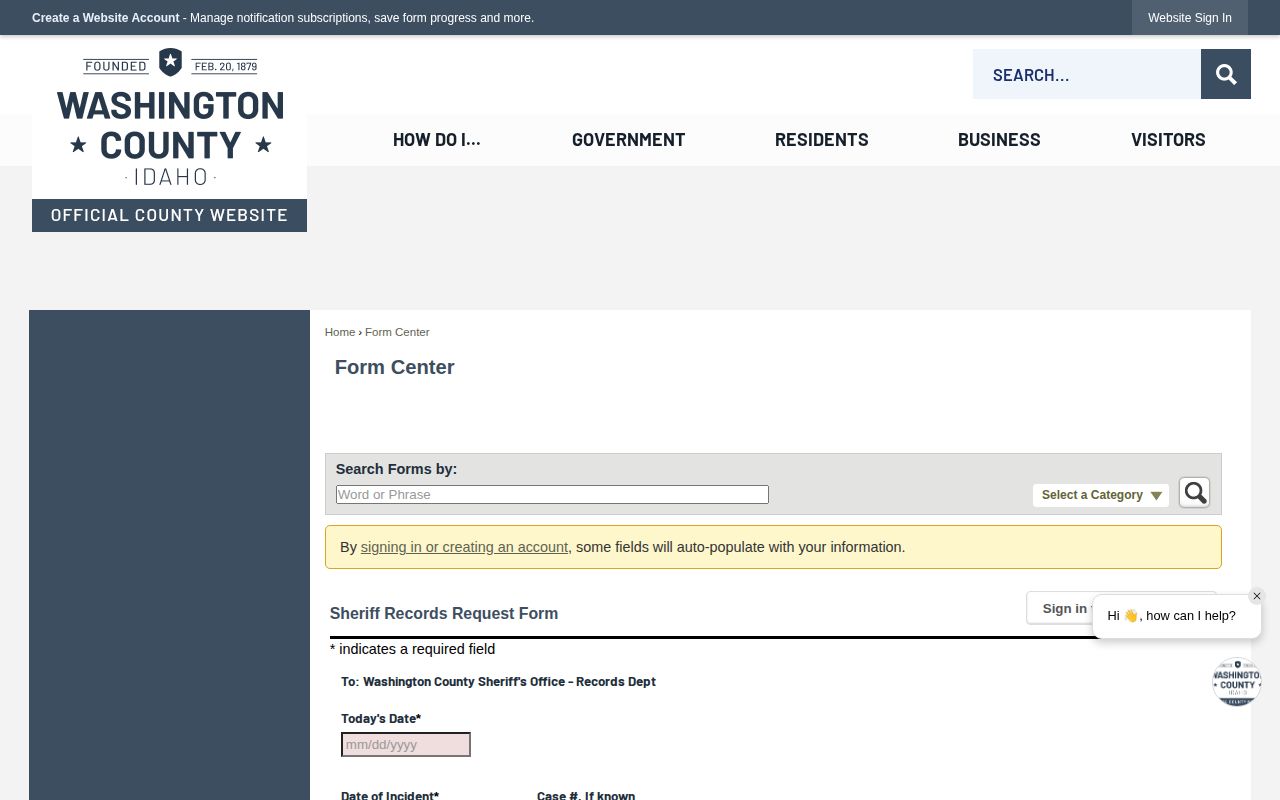
Preserving the submitted terms and response makes the resulting three-day list traceable to its custodian.
Washington County name collisions create another risk. Search results often surface Oregon release pages and apps. Verify Weiser, Idaho and the official .id.us domain. An attractive Oregon 24-hour log does not document an Idaho jail event.
Choose the Right Release Window
Use the 24-Hour Releases process for a same-day interval. Use 72 hours to cover three fixed dates or to bridge a weekend, while retaining exact boundaries. Neither page publishes an inferred list. For one named person across jail, court, state, and federal sources, the Washington County released-inmate lookup provides the broader route.
Release categories also affect interpretation. Bond or recognizance can end pretrial jail custody while the case stays open. A completed local sentence may still be followed by probation. A transfer to IDOC, another county, a federal agency, or immigration custody is only a handoff. Ask for the destination field when public, then verify with that custodian rather than treating all departures as freedom.
If a state record shows parole or probation, read its overall status and sentence rows together. “In community” can mean physical release under ongoing IDOC supervision. A Sentence Satisfaction Date concerns the active sentence, not necessarily the prison gate date. These statewide fields add context to a named case but cannot supply a complete Washington County three-day list.
The final result should answer more than whether a name disappeared. It should identify the county booking, actual release or transfer time, source terminology, authority, and next custodian when public. That is the difference between a verifiable release record and a guess built from snapshots.