
Washington County Projected Release Dates
A projected, scheduled, eligible, tentative, and actual release date can refer to different stages. For an unsentenced Washington County Jail detainee, release turns on bond, recognizance, dismissal, a release order, or another legal event. There is no sentence-based date to calculate. Even a dismissal on one case may not end custody if another hold exists.
For a sentenced person, start with the judgment. A county misdemeanor sentence is calculated from the commitment, credit for time served, concurrent or consecutive cases, later orders, and holds. A state prison sentence follows Idaho’s fixed and indeterminate framework. Parole eligibility opens a possible decision point. A tentative grant still carries conditions. Released to Supervision is retrospective evidence of community placement.
Find Washington County Release Dates
Identify the last known custodian before searching. Washington County Jail, IDOC, and a federal agency keep different records. The county’s Daily Inmate Roster only reports current custody and is not a release-date archive. A person who disappears from it could have entered the community, transferred, or had a record corrected.
- Check the Washington County roster only to see whether the person is currently listed.
- For a local jail sentence, obtain the judgment through iCourt and ask Sheriff Records for the sentence calculation and release entry.
- For an IDOC sentence, search the Resident/Client Search by last name or IDOC number.
- Match age, IDOC number, sentencing county, and case number before reading dates.
- Keep Parole Eligibility, Next Parole Hearing, Released to Supervision, and Sentence Satisfaction labels separate.
- Confirm a future or changed date with the listed jail, IDOC office, or Commission source.
A named-person lookup across all custodians is also covered on the Washington County released inmates home page. Use it when the custody path is not yet known.
Washington County IDOC Date Fields
IDOC does not expose one universal “Projected Release Date” field in the records reviewed. Its Resident/Client Search uses several precise labels. Parole Eligibility Date marks the earliest expected threshold for discretionary consideration. Next Parole Hearing Date is an administrative schedule. A Commission date can remain tentative. Released to Supervision records a past placement. Sentence Satisfaction Date concerns the end of the active sentence row, not the prison gate.
| IDOC or Commission date | Meaning |
|---|---|
| Sentence effective date | Judicial calculation start, subject to credited time and the judgment |
| Parole Eligibility Date | When discretionary parole consideration may begin |
| Next Parole Hearing Date | A scheduled review that may change |
| Tentative parole date | A conditional Commission date, not final release proof |
| Released to Supervision | The most recent actual community placement by court or Commission |
| Sentence Satisfaction Date | The expected or recorded end of the active sentence |
The official IDOC search form accepts partial last-name and IDOC-number searches and warns that public data can lag changing facts.
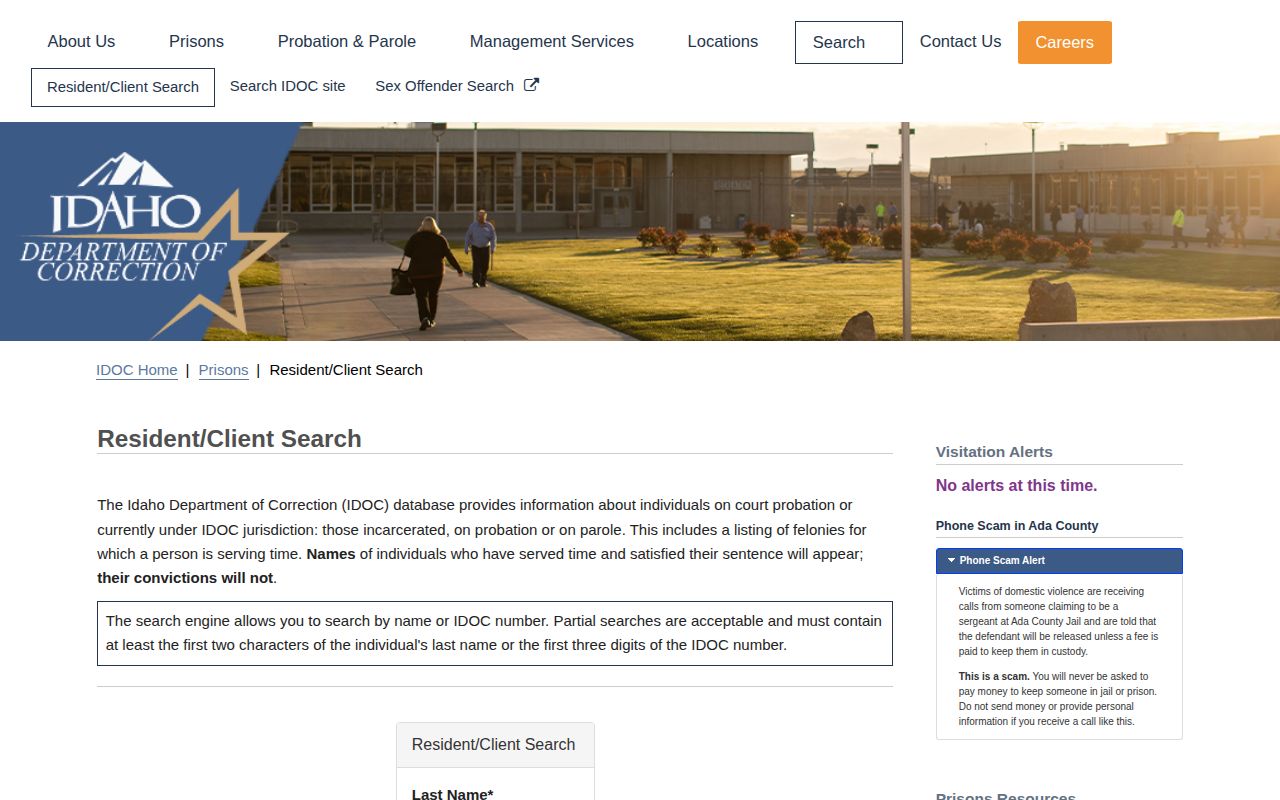
The search is statewide. It should not be described as a Washington County jail release list, and some short local sentences will never appear there.
Washington County Parole Date Labels
An incarcerated IDOC record may display both eligibility and hearing fields. The official incarcerated example shows the exact Parole Eligibility Date and Next Parole Hearing Date labels.
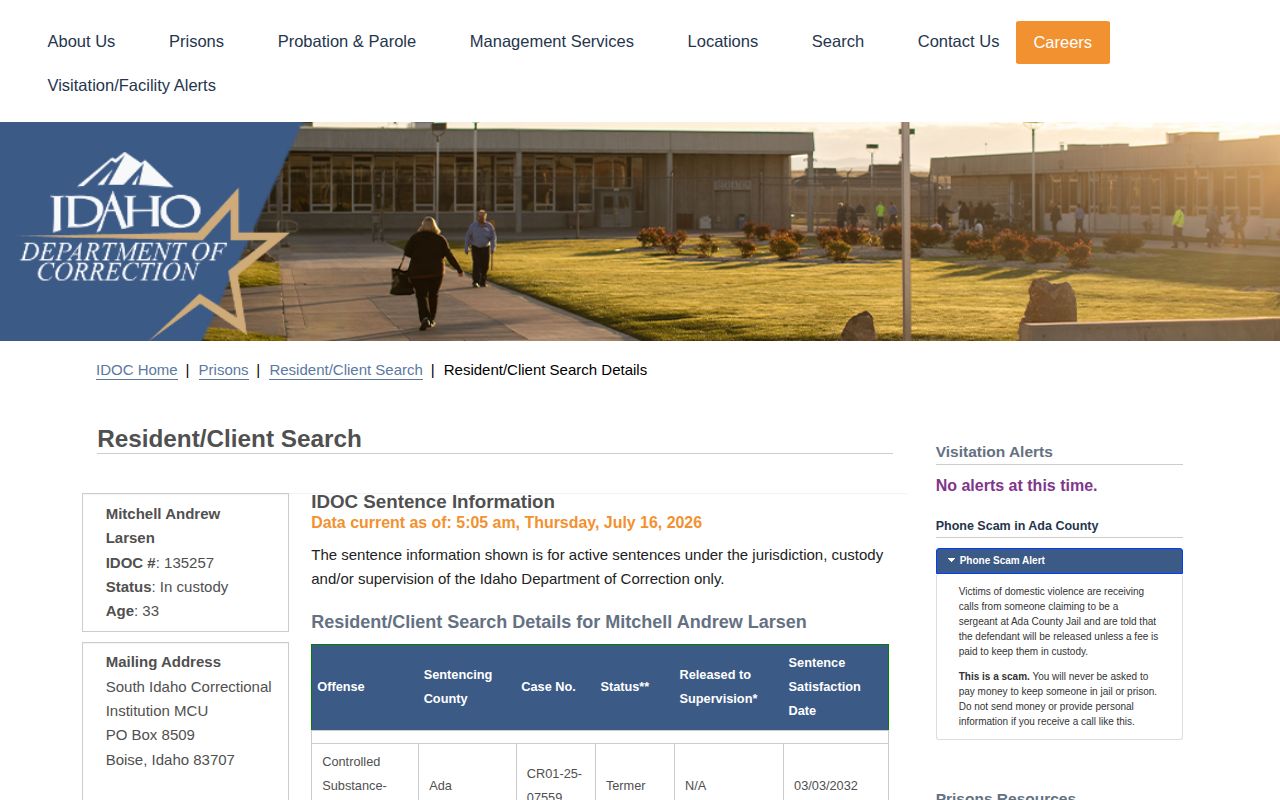
Those labels teach two different facts. Eligibility is a sentence threshold. A hearing is a planned proceeding. Neither says the person has walked out. After a favorable action, the Commission still requires applicable programming and an approved parole plan before final release.
The Commission hearing calendar identifies scheduled matters, while its decision archive provides Notices of Action Taken. Outcomes may include grant, denial, deferment, reconsideration, or revocation action. Do not infer an outcome because a name moved or vanished from a calendar. Actual placement is confirmed through current IDOC status and Released to Supervision.
Idaho Fixed-Term Release Rules
Idaho does not use the federal shorthand that everyone serves about 85 percent. Under Idaho Code §19-2513, the court states a minimum fixed term and may add an indeterminate maximum. During that fixed minimum, ordinary parole, discharge, or routine good-conduct reduction is generally unavailable, subject to narrow law. The fixed term is therefore a judicial minimum, not an estimate created by subtracting a standard percentage.
After the fixed period, parole remains discretionary. The Commission considers the case under its authority, and offense-specific limits may also apply. The maximum or satisfaction point can end the sentence if no later legal change intervenes. The public record must be read with the judgment because sentence rows, credited time, and concurrent or consecutive structure affect the chronology.
- Fixed term
- The minimum part during which ordinary parole is generally unavailable.
- Indeterminate term
- The additional maximum range a court may impose.
- Parole eligibility
- The threshold for possible discretionary review, not a guaranteed exit.
- Sentence satisfaction
- The end of the active sentence rather than the date prison custody first ended.
Washington County Good-Time Limits
Idaho Code §20-101D does not create routine monthly earned time for good behavior. It authorizes a narrow, discretionary meritorious reduction for extraordinary heroism that risks life or outstanding service that saves life, prevents major property loss in a riot, or prevents escape. The reduction is limited and may be withdrawn under governing rules.
That standard cannot be converted into a family calculator. Ordinary compliance does not support an Idaho 85-percent estimate. Use the judgment, exact statutory framework, and agency sentence record instead. If credited time or a sentence entry appears wrong, ask the court or IDOC to review the source record. A public portal estimate should not replace the signed judgment.
Note: Idaho’s meritorious reduction is extraordinary and discretionary, not a routine reward for each month served.
Washington County Jail Date Calculation
A county sentence needs its own calculation. The IDOC statute and search cannot compute a Washington County misdemeanor discharge that never entered state custody. Relevant records include the judgment, commitment, credit for time served, concurrent or consecutive case language, holds, and amended orders. Sheriff Records can identify the operational release entry after the calculation is carried out.
No official Washington County source in the research establishes a routine local good-time formula, standard release hour, Friday substitution for a weekend date, or holiday-release rule. Those are valid questions for the jail, but not facts to assume. Ask for the sentence-calculation record and release date or time. If timing is important, distinguish the legal end date, data-entry time, and physical departure.
The Sheriff Records Request Form can be narrowed by person, booking period, case number, and named fields. Request the booking number, commitment, credits reflected, release date and time, release reason, authority, hold, and receiving agency where public. A written scope preserves the question if the office needs clarification.
Why Washington County Dates Change
A projected date can move because the law, custody status, or source record changes. Some events affect the sentence calculation. Others change whether the person can actually leave on that date. Read the latest court, jail, IDOC, and Commission records together.
| Factor | Possible effect | Best confirmation |
|---|---|---|
| Credited time or amended judgment | Changes the judicial calculation | Washington County court order |
| Concurrent or consecutive cases | Combines or extends time | Each judgment and sentence row |
| Detainer or another hold | May cause transfer instead of community release | Jail release entry and receiving agency |
| Commission grant, denial, or deferment | Changes parole timing or leaves custody in place | Notice of Action Taken and IDOC |
| Program or parole-plan requirement | Can delay a tentative parole date | Commission and IDOC |
| Violation, warrant, or revocation | May return a supervised person to custody | IDOC status, Commission, and court |
A person may be Released to Supervision, later reported as a violator or fugitive, returned to custody, and released again. The newest placement date can differ from the first prison release. Request IDOC history when that sequence matters.
Confirm Washington County Actual Release
Future dates remain plans until the custodian reports the event. For Washington County Jail, obtain the sheriff’s release entry and pair it with the court docket. For state prison, read current IDOC Overall Status and sentence rows after the expected date. “In community” with Released to Supervision supports actual placement, while a facility address or in-custody status does not.
VINE can add a pending event alert for a known person. Registration and its limits are explained on the Washington County VINE inmate check. An alert may lag and should be reconciled with its source. For federal custody, use BOP rather than IDOC. “Not in BOP custody” also does not rule out another custodian.
A careful answer states the label, agency, time checked, and narrow conclusion. “Parole eligible” is not “released.” “Sentence satisfied” is not always the prison exit date. “Removed from the county roster” is not proof of community release. Those limits keep a projected date from becoming a false promise.
Public Record Search
Sponsored Results